by NFS | Mar 17, 2011 | Archives
If you itemize deductions and are an employee, you may be able to deduct certain work-related expenses. The IRS has put together the following facts to help you determine which expenses may be deducted as an employee business expense.
Expenses that qualify for an itemized deduction include:
- Business travel away from home
- Business use of car
- Business meals and entertainment
- Travel
- Use of your home
- Education
- Supplies
- Tools
- Miscellaneous expenses
You must keep records to prove the business expenses you deduct. For general information on recordkeeping, see IRS Publication 552, Recordkeeping for Individuals available on the IRS website, http://www.irs.gov, or by calling 800-829-3676.
If your employer reimburses you under an accountable plan, you do not include the payments in your gross income, and you may not deduct any of the reimbursed amounts.
An accountable plan must meet three requirements:
- You must have paid or incurred expenses that are deductible while performing services as an employee.
- You must adequately account to your employer for these expenses within a reasonable time period, and
- You must return any excess reimbursement or allowance within a reasonable time period.
If the plan under which you are reimbursed by your employer is non-accountable, the payments you receive should be included in the wages shown on your Form W-2. You must report the income and itemize your deductions to deduct these expenses.
Generally, report expenses on IRS Form 2106 or IRS Form 2106-EZ to figure the deduction for employee business expenses and attach it to Form 1040. Deductible expenses are then reported on Form 1040, Schedule A, as a miscellaneous itemized deduction subject to 2% of your adjusted gross income rules. Only employee business expenses that are in excess of 2% of your adjusted gross income can be deducted.
For more information see IRS Publication 529, Miscellaneous Deductions available on the IRS website.
by NFS | Mar 16, 2011 | Archives
Do You Still Have Enough Life Insurance?
http://ping.fm/3vPYw
by NFS | Mar 16, 2011 | Archives
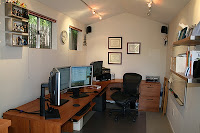
Whether you are self-employed or an employee, if you use a portion of your home for business, you may be able to take a home office deduction. Here are six things the IRS wants you to know about the Home Office deduction
1. Generally, in order to claim a business deduction for your home, you must use part of your home exclusively and regularly:
- as your principal place of business, or
- as a place to meet or deal with patients, clients or customers in the normal course of your business, or
- in any connection with your trade or business where the business portion of your home is a separate structure not attached to your home.
2. For certain storage use, rental use, or daycare-facility use, you are required to use the property regularly but not exclusively.
3. Generally, the amount you can deduct depends on the percentage of your home used for business. Your deduction for certain expenses will be limited if your gross income from your business is less than your total business expenses.
4. There are special rules for qualified daycare providers and for persons storing business inventory or product samples.
5. If you are self-employed, use Form 8829, Expenses for Business Use of Your Home to figure your home office deduction and report those deductions on line 30 of Form 1040 Schedule C, Profit or Loss From Business.
6. If you are an employee, additional rules apply for claiming the home office deduction. For example, the regular and exclusive business use must be for the convenience of your employer.
For more information see IRS Publication 587, Business Use of Your Home. I am here to help – let me know if I can be of any assistance.

by NFS | Mar 14, 2011 | Archives
If you paid someone to care for your child, spouse, or dependent last year, you may be able to claim the Child and Dependent Care Credit on your federal income tax return. Below are 10 things the IRS wants you to know about claiming a credit for child and dependent care expenses.
- The care must have been provided for one or more qualifying persons. A qualifying person is your dependent child age 12 or younger when the care was provided. Additionally, your spouse and certain other individuals who are physically or mentally incapable of self-care may also be qualifying persons. You must identify each qualifying person on your tax return.
- The care must have been provided so you – and your spouse if you are married filing jointly – could work or look for work.
- You – and your spouse if you file jointly – must have earned income from wages, salaries, tips, other taxable employee compensation or net earnings from self-employment. One spouse may be considered as having earned income if they were a full-time student or were physically or mentally unable to care for themselves.
- The payments for care cannot be paid to your spouse, to the parent of your qualifying person, to someone you can claim as your dependent on your return, or to your child who will not be age 19 or older by the end of the year even if he or she is not your dependent. You must identify the care provider(s) on your tax return.
- Your filing status must be single, married filing jointly, head of household or qualifying widow(er) with a dependent child.
- The qualifying person must have lived with you for more than half of 2010. There are exceptions for the birth or death of a qualifying person, or a child of divorced or separated parents. See Publication 503, Child and Dependent Care Expenses.
- The credit can be up to 35 percent of your qualifying expenses, depending upon your adjusted gross income.
- For 2010, you may use up to $3,000 of expenses paid in a year for one qualifying individual or $6,000 for two or more qualifying individuals to figure the credit.
- The qualifying expenses must be reduced by the amount of any dependent care benefits provided by your employer that you deduct or exclude from your income.
- If you pay someone to come to your home and care for your dependent or spouse, you may be a household employer and may have to withhold and pay social security and Medicare tax and pay federal unemployment tax. See Publication 926, Household Employer’s Tax Guide.
For more information on the Child and Dependent Care Credit, see Publication 503, Child and Dependent Care Expenses or contact my office.

by NFS | Mar 13, 2011 | Archives
Do you rent property to others? If so, you’ll want to read the following seven tips from the IRS about rental income and expenses.
You generally must include in your gross income all amounts you receive as rent. Rental income is any payment you receive for the use of or occupation of property. Expenses of renting property can be deducted from your gross rental income. You generally deduct your rental expenses in the year you pay them. Publication 527, Residential Rental Property, includes information on the expenses you can deduct if you rent property.
1. When to report income. You generally must report rental income on your tax return in the year that you actually receive it.
2. Advance rent. Advance rent is any amount you receive before the period that it covers. Include advance rent in your rental income in the year you receive it, regardless of the period covered.
3. Security deposits. Do not include a security deposit in your income when you receive it if you plan to return it to your tenant at the end of the lease. But if you keep part or all of the security deposit during any year because your tenant does not live up to the terms of the lease, include the amount you keep in your income in that year.
4. Property or services in lieu of rent. If you receive property or services, instead of money, as rent, include the fair market value of the property or services in your rental income. If the services are provided at an agreed upon or specified price, that price is the fair market value unless there is evidence to the contrary.
5. Expenses paid by tenant. If your tenant pays any of your expenses, the payments are rental income. You must include them in your income. You can deduct the expenses if they are deductible rental expenses. See Rental Expenses in Publication 527, for more information.
6. Rental expenses. Generally, the expenses of renting your property, such as maintenance, insurance, taxes, and interest, can be deducted from your rental income.
7. Personal use of vacation home. If you have any personal use of a vacation home or other dwelling unit that you rent out, you must divide your expenses between rental use and personal use. If your expenses for rental use are more than your rental income, you may not be able to deduct all of the rental expenses.
For more information on rental income and expenses see Publication 527 or call my office at 800-560-4NFS.