by NFS | Dec 24, 2020 | Archives, Blog Posts
Your friends at Northeast Financial Strategies want you to know how much your loyalty and friendship are appreciated this year and in all years past. At the holiday season, our thoughts turn gratefully to those who have made our success possible. It is in this spirit we say…
THANK YOU and Best Wishes for the holidays and a Happy New Year!

by NFS | Dec 23, 2020 | Archives, Blog Posts
In most cases, gains from sales are taxable. But did you know that if you sell your home, you may not have to pay taxes? Here are ten facts to keep in mind if you sell your home this year.
1. Exclusion of Gain. You may be able to exclude part or all of the gain from the sale of your home. This rule may apply if you meet the eligibility test. Parts of the test involve your ownership and use of the home. You must have owned and used it as your main home for at least two out of the five years before the date of sale.
2. Exceptions May Apply. There are exceptions to the ownership, use, and other rules. One exception applies to persons with a disability. Another applies to certain members of the military. That rule includes certain government and Peace Corps workers. For more information about these exceptions, please call the office.
3. Exclusion Limit. The most gain you can exclude from tax is $250,000. This limit is $500,000 for joint returns. The Net Investment Income Tax will not apply to the excluded gain.
4. May Not Need to Report Sale. If the gain is not taxable, you may not need to report the sale to the IRS on your tax return.
5. When You Must Report the Sale. You must report the sale on your tax return if you can’t exclude all or part of the gain. You must report the sale if you choose not to claim the exclusion. That’s also true if you get Form 1099-S, Proceeds from Real Estate Transactions. If you report the sale, you may need to pay the Net Investment Income Tax. Please call the office for assistance on this topic.
6. Exclusion Frequency Limit. Generally, you may exclude the gain from the sale of your main home only once every two years. Some exceptions may apply to this rule.
7. Only a Main Home Qualifies. If you own more than one home, you may only exclude the gain on the sale of your main home. Your main home usually is the home that you live in most of the time.
8. First-time Homebuyer Credit. If you claimed the first-time homebuyer credit when you bought the home, special rules apply to the sale. For more on those rules, please call.
9. Home Sold at a Loss. If you sell your main home at a loss, you can’t deduct the loss on your tax return.
10. Report Your Address Change. After you sell your home and move, update your address with the IRS. To do this, file Form 8822, Change of Address. You can find the address to send it to in the form’s instructions on page two. If you purchase health insurance through the Health Insurance Marketplace, you should also notify the Marketplace when you move out of the area covered by your current Marketplace plan.
Questions? Help is just a phone call away.

by NFS | Dec 22, 2020 | Archives, Blog Posts
The Federal Trade Commission has launched a new website designed to make it easier for victims of potential fraud to file a report with the federal authorities.
The new site, ReportFraud.ftc.gov, prompts those reporting a scam with “next steps” that offer specific guidance based on the nature of the scam.
Romance scams were by far the most costly to older Americans, causing nearly $84 million in financial losses last year. These scams usually begin with a social media contact and eventually lead to a deceitful request for money.
FAQs on the website include:
Report anything you think may be a fraud, scam, or bad business practice. For ideas of what you might report to the FTC, check out consumer.ftc.gov for more information and advice, or take a look at the FTC’s latest cases at ftc.gov.
- I’m not sure if it’s a scam or fraud — should I still report it?
Yes, please report it. Whether you think it’s a scam, you know it is, or you’re not happy about a business practice, tell the FTC. The FTC and its law enforcement partners enforce a variety of laws. Your report makes a difference and can help law enforcers spot problems. Learn more about scams and how the FTC works to stop them at consumer.ftc.gov.
- Can I file a report if I don’t live in the U.S.?
If you live outside the U.S. or want to report an international scam, you can use econsumer.gov to file your report. It will then be included in the FTC’s Consumer Sentinel database. Econsumer.gov is a partnership of more than 35 consumer protection agencies around the world and helps identify trends and prevent international scams. It’s available in English, Spanish, French, German, Korean, Japanese, Polish, and Turkish.
The FTC also collects data related to various aspects of its mission and work and shares that data in different formats and at different levels of frequency. Explore Data links to visualizations, reports, API endpoints, and datasets.
Explore Data lets you dig into consumer data on fraud, identity theft, unwanted calls, and other consumer problems based on reports from the public to the FTC’s Consumer Sentinel Network database and complaints to FTC about unwanted calls. Our interactive dashboards let you spot trends and find out about top reports in your state and around the country. You can also dig into data about refunds the FTC got for people in FTC law enforcement cases, and see where that money went.
by NFS | Dec 21, 2020 | Archives, Blog Posts
There’s never an off-season when it comes to scammers and thieves who want to trick people to scam them out of money, steal their personal information, or talk them into engaging in questionable behavior with their taxes. While scam attempts typically peak during tax season, taxpayers need to remain vigilant all year long.
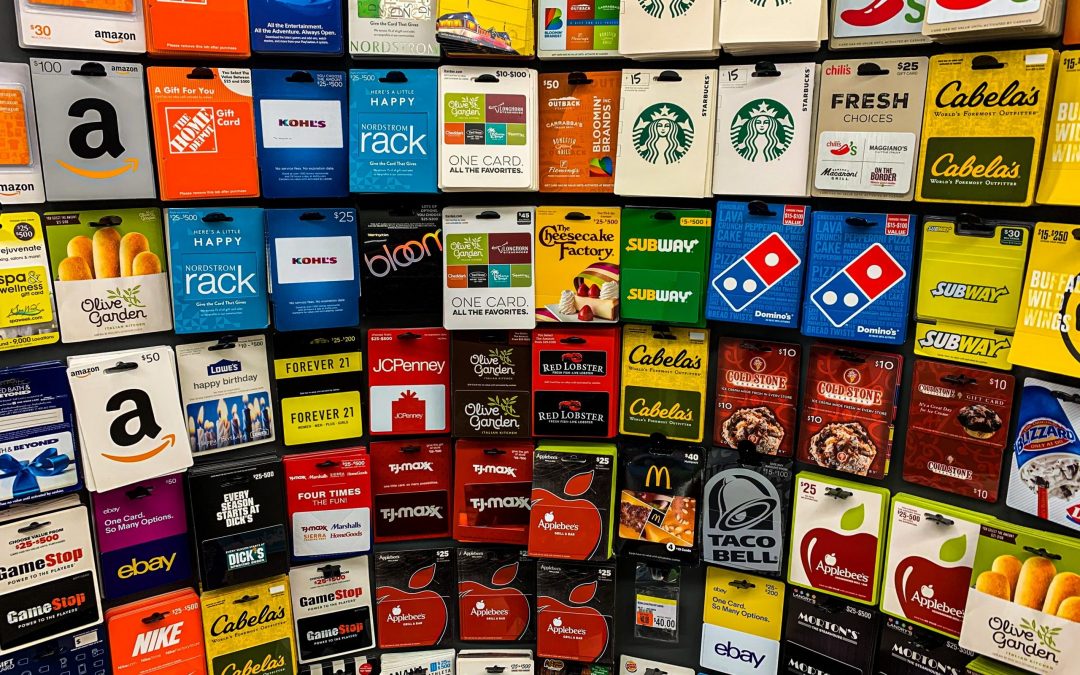
For example, there are many reports of taxpayers being asked to pay a fake tax bill through the purchase of gift cards. While gift cards are a popular and convenient gift for all occasions, they are also a tool that scammers use to steal money from people.
Scammers often target taxpayers by asking them to pay a fake tax bill with gift cards. They may also use a compromised email account to send emails requesting gift card purchases for friends, family or co-workers. The IRS reminds taxpayers gift cards are for gifts, not for making tax payments.
The most common way scammers request gift cards is over the phone through a government impersonation scam. However, they will also request gift cards by sending a text message, email or through social media.
Here’s a typical scenario:
A scammer posing as an IRS agent will call the taxpayer or leave a voicemail with a callback number informing the taxpayer that they are linked to some criminal activity. For example, the scammer will tell the taxpayer their identity has been stolen and used to open fake bank accounts.
Here’s how the scam unfolds:
- The scammer will threaten or harass the taxpayer by telling them that they must pay a fictitious tax penalty.
- The scammer instructs the taxpayer to buy gift cards from various stores.
- Once the taxpayer buys the gift cards, the scammer will ask the taxpayer to provide the gift card number and PIN.
Scammers are continuously perfecting their tricks and sometimes it is difficult to determine whether it is really the IRS calling. Keep in mind that the IRS will never do the following:
- Call to demand immediate payment using a specific payment method such as a prepaid debit card, gift card or wire transfer. Generally, the IRS will first mail a bill to any taxpayer who owes taxes.
- Demand that taxpayers pay taxes without the opportunity to question or appeal the amount they owe. All taxpayers should be aware of their rights.
- Threaten to bring in local police, immigration officers or other law-enforcement to have the taxpayer arrested for not paying.
- Threaten to revoke the taxpayer’s driver’s license, business licenses, or immigration status.
What to do if you think you’ve been targeted by a scammer
Anyone who believes they’ve been targeted by a scammer should contact the Treasury Inspector General for Tax Administration to report a phone scam. Use their IRS Impersonation Scam Reporting web page or call 800-366-4484.
Phone scams should also be reported to the Federal Trade Commission. Use the FTC Complaint Assistant on FTC.gov and make sure to add “IRS Telephone Scam” in the notes.
Unsolicited email claiming to be from the IRS, or an IRS-related component like the Electronic Federal Tax Payment System, should be reported to the IRS at phishing@irs.gov and be sure to add “IRS Phone Scam” to the subject line.
Remember, gift cards are for gifts, not for making tax payments.

by NFS | Dec 18, 2020 | Archives, Blog Posts
Certain energy-efficient home improvements can cut your energy bills and save you money at tax time. While many of these tax credits expired at the end of 2016, tax credits for residential and non-business energy-efficient solar technologies do not expire until December 31, 2021. Here are some key facts that you should know about these tax credits:
Residential Energy Efficient Property Credit
- This tax credit is 30 percent of the cost of alternative energy equipment installed on or in your home.
- Qualified equipment includes solar hot water heaters and solar electric equipment placed into service on or after January 1, 2006, and on or before December 31, 2021.
- There is no maximum credit for systems placed in service after 2008.
- The tax credit does not apply to solar water-heating property for swimming pools or hot tubs.
- If your credit is more than the tax you owe, you can carry forward the unused portion of this credit to next year’s tax return.
- At least half the energy used to heat the dwelling’s water must be from solar in order for the solar water-heating property expenditures to be eligible.
- Solar water-heating equipment must be certified for performance by the Solar Rating Certification Corporation (SRCC) or a comparable entity endorsed by the government of the state in which the property is installed.
- The home must be in the U.S. It does not have to be your main home.
- Use Form 5695, Residential Energy Credits, to claim the credit.
Equipment costs such as assembling or installing original systems, on-site labor costs, and costs related to wiring or piping solar technology systems are considered final when the installation is complete. For a new home, the placed-in-service date is the occupancy date.
The maximum allowable credit varies by the type of technology:
Solar-electric property
- 30% for systems placed in service by 12/31/2019
- 26% for systems placed in service after 12/31/2019 and before 01/01/2021
- 22% for systems placed in service after 12/31/2020 and before 01/01/2022
Solar water-heating property
- 30% for systems placed in service by 12/31/2019
- 26% for systems placed in service after 12/31/2019 and before 01/01/2021
- 22% for systems placed in service after 12/31/2020 and before 01/01/2022
If you would like more information about this topic please contact the office today.