
Special Needs Planning: First Steps in NFS Retirement Readings
http://ping.fm/D6ao8

Payroll Tax Cut to Boost Take-Home Pay for Most Workers; New Withholding Details Now Available
WASHINGTON ― The Internal Revenue Service today released instructions to help employers implement the 2011 cut in payroll taxes, along with new income-tax withholding tables that employers will use during 2011.
 Millions of workers will see their take-home pay rise during 2011 because the Tax Relief, Unemployment Insurance Reauthorization, and Job Creation Act of 2010 provides a two percentage point payroll tax cut for employees, reducing their Social Security tax withholding rate from 6.2 percent to 4.2 percent of wages paid. This reduced Social Security withholding will have no effect on the employee’s future Social Security benefits.
 The new law also maintains the income-tax rates that have been in effect in recent years.
Employers should start using the new withholding tables and reducing the amount of Social Security tax withheld as soon as possible in 2011 but not later than Jan. 31, 2011. Notice 1036, released today, contains the percentage method income tax withholding tables, the lower Social Security withholding rate, and related information that most employers need to implement these changes. Publication 15, (Circular E), Employer’s Tax Guide, containing the extensive wage bracket tables that some employers use, will be available on IRS.gov in a few days.
The IRS recognizes that the late enactment of these changes makes it difficult for many employers to quickly update their withholding systems. For that reason, the agency asks employers to adjust their payroll systems as soon as possible, but not later than Jan. 31, 2011.
For any Social Security tax over withheld during January, employers should make an offsetting adjustment in workers’ pay as soon as possible but not later than March 31, 2011.
Employers and payroll companies will handle the withholding changes, so workers typically won’t need to take any additional action, such as filling out a new W-4 withholding form.
As always, however, the IRS urges workers to review their withholding every year and, if necessary, fill out a new W-4 and give it to their employer. For example, individuals and couples with multiple jobs, people who are having children, getting married, getting divorced or buying a home, and those who typically wind up with a balance due or large refund at the end of the year may want to consider submitting revised W-4 forms. Publication 919, How Do I Adjust My Tax Withholding?, provides more information to workers on making changes to their tax withholding. As always, if you need assistance with your withholdings, or any other tax & financial situation, please do not hesitate to contact me at 800-560-4NFS extension 14.

White House Plans to Scale Back Tax Cut Extension in 2012
Washington, D.C – Vice President Joe Biden indicated the Obama administration intends to limit the newly extended tax cuts when they come up again for renewal in 2012.
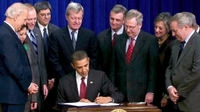
President Obama signed an extension of the Bush-era tax cut rates on Friday after the House passed the legislation Thursday night (see House Passes Extension of Bush Tax Cuts and Unemployment Rates). The legislation, which largely abided by a framework agreement that President Obama struck with Senate Minority Leader Mitch McConnell, R-Ken., earlier this month, extended the current income, dividend and capital gains tax rates for another two years, even for those making over $250,000 a year, along with setting the estate tax at 35 percent for estates over $5 million.
In return, Republican congressional leaders agreed to support some of the Obama administration’s priorities in the legislation, including a 13-month extension of unemployment benefits, and a 2 percentage point cut in Social Security payroll taxes for a year from 6.2 to 4.2 percent. The bill also provides extensions of the Child Tax Credit, the Earned Income Tax Credit, the American Opportunity Tax Credit for college tuition, the Research & Experimentation Credit, and a host of other tax extender items; a two-year patch to the alternative minimum tax; and 100 percent bonus depreciation expensing of business investments in plant and equipment for 2011 and 50 percent for 2012.
However, the Obama administration has long opposed extending the Bush tax cuts for those making over $250,000 a year. Biden made clear that the administration would oppose the extension of those rates beyond 2012, even in an election year, as well as the 35 percent estate tax rate. Speaking to NBC White House correspondent David Gregory on “Meet the Press” on Sunday, Biden said, “The one target for us in two years is no longer extending the upper-income tax credit for millionaires and billionaires, and scaling back what we had to do to get the compromise, the estate tax for the very wealthy.”
Asked whether he thought anybody in Congress would vote in an election year not to extend the tax cuts, Biden insisted they would as a result of the work of the bipartisan deficit commission, which recently gave its recommendations on ways to cut the federal budget deficit. “I think what’ll be different is that we will have had the outcome of the deficit commission,” he said. “We will be able to make the case much more clearly that spending $700 billion over 10 years to extend tax cuts for people whose income averages well over a million dollars does not make sense.”
On Friday, McConnell and several other Republican legislators attended the White House signing ceremony for the tax cut extension, a rarity so far in the Obama administration, but also a signal that the Republican leadership in Congress may be willing to work with the administration on some issues where there is common ground.
At the signing ceremony, Biden jokingly referred to an earlier impromptu remark he had made during the signing ceremony for the health care reform bill, in which a microphone caught him mixing an expletive in with his enthusiastic comment.
“Ladies and gentlemen,” he said at Friday’s signing ceremony, “this is a — I wasn’t going to say, ‘a big deal,’ but an important deal. I can no longer say ‘big deal.’ Thank god, my mother wasn’t around.”
Biden commended McConnell and the other Republicans in attendance, including Rep. Dave Camp, R-Mich., who is expected to chair the tax-writing House Ways and Means Committee in January, for agreeing to work with the administration on the tax cut package.
“This package is a result of leaders from both sides coming together to act on behalf of the American people at a time they need it most,” he said. “I want to begin by applauding Senator Mitch McConnell, and the other Republican leaders, who like their Democratic counterparts who are here today, were willing to take issue with some of their own party and to do what was, in their view, necessary in order to move the country forward. That’s what the American people expect of all of us, especially in these times. And that’s what we’ve done here. It means accepting some things we don’t like in order to get the job done for Americans as needs to be done.”
Obama echoed Biden’s comment that the administration had settled for some provisions of the deal to which it was initially opposed. “Now, candidly speaking, there are some elements of this legislation that I don’t like,” he said. “There are some elements that members of my party don’t like. There are some elements that Republicans here today don’t like. That’s the nature of compromise — yielding on something each of us cares about to move forward on what all of us care about. And right now, what all of us care about is growing the American economy and creating jobs for the American people. Taken as a whole, that’s what this package of tax relief is going to do. It’s a good deal for the American people. This is progress. And that’s what they sent us here to achieve.”
By Michael Cohn
Accounting Today

Excuses, Excuses
Time to stop the excuses! Watch this fun web movie that features that little inner voice we all have that tells us to stop making excuses and start protecting what’s most valuable to us – the future of our loved ones.
When you are finished watching the video, give me a call and we can chat about getting your life insurance plan set up TODAY.
800-560-4NFS x 14


House Passes Extension of Bush Tax Cuts and Unemployment Benefits
WASINGTON DC – The House approved an $858 billion extension of the Bush-era tax rates and unemployment benefits late Thursday night, a day after the Senate approved the bill, sending the bill to President Obama’s desk.
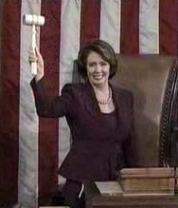 After procedural hurdles held up the vote for much of the day on Thursday, the House reconvened in the evening to settle the terms of the debate. Amid widespread dissatisfaction among House Democrats over the terms of the deal struck by President Obama and Republican congressional leaders, especially on setting the estate tax at a rate of 35 percent for estates over $5 million, they agreed to first hold a vote on an amendment by Rep. Earl Pomeroy, D-N.D., which would set the estate tax rate at 45 percent for inheritances over $3.5 million. That amendment was defeated by a vote of 233 to 194.
The House next proceeded to a vote on the bill passed by the Senate on Wednesday, and that passed by a vote of 277-148 (see Senate Passes Bush Tax Cut and Unemployment Extension).
The bill includes a two-year extension of the Bush-era income tax rates, including those for dividends and capital gains. It also extends emergency unemployment insurance for another 13 months. The bill would also lower Social Security payroll taxes by 2 percentage points from 6.2 percent to 4.2 percent for a year. Several lawmakers, however, criticized that provision, saying it would weaken the Social Security trust fund and pointing out that it would not be open to those government employees who do not pay Social Security withholding taxes.
The bill would also extend the Child Tax Credit, the Earned Income Tax Credit, and the American Opportunity Tax Credit for college tuition. It would also allow businesses to deduct 100 percent of investments in plant and equipment in the first year, and extend for two years the state and local sales tax deduction. In addition the bill would “patch” the AMT, extending Alternative Minimum Tax relief for two years to prevent the AMT from ensnaring millions more taxpayers. The bill also includes extensions of the Research and Experimentation Credit for businesses.
It also would extend a variety of popular tax breaks, including the ability of schoolteachers to expense purchases of school supplies. The bill also includes energy tax breaks for biodiesel fuel, ethanol and renewable energy sources.
During the debate earlier in the evening, many of the lawmakers expressed misgivings about the bill and its effect on the deficit, but said they felt the need to pass the legislation outweighed those concerns. Others could not bring themselves to support the bill and denounced the continuation of the Bush tax cuts for the wealthy, especially the exemption on estate taxes for inheritances below $5 million for individuals and $10 million for couples.
“I salute President Obama for getting in the bill what is in there,” said House Speaker Nancy Pelosi, D-Calif. “I am sorry for the price that has to be paid by our children and our grandchildren to the Chinese government to pay for the increase in the deficit that the Republicans insisted upon.”
Rep. Dave Camp, R-Mich., who is expected to chair the tax-writing House Ways and Means Committee in January when Republicans become the majority party in the House, complained that Democrats had not settled the question of the Bush tax cuts extension prior to the midterm elections.
“There is some explaining to do,” he said. “Why wasn’t this issue dealt with before the election? Why didn’t the majority bring a bill to the floor before the election? Now, as Americans face these tax increases, here we are just a few short days before the end of the year, and now because there is a bipartisan compromise that incidentally passed the Senate by 81-19 there is a recognition that this is no time to be playing games with our economy. The failure to block these tax increases would be a direct hit to families and small businesses and employers and further delay our economic recovery, and for those reasons I support this.”
Here is a sampling of other comments by lawmakers during the debate:
Rep. Danny Davis, D-Ill.: “I was at a meeting of CEDA, the organization in Chicago and Cook County that services low-income families, trying to figure out how to help my constituents get their homes heated because it might be snowing in Washington, but it’s cold in Chicago. The telephone rings and somebody said, ‘Could you take a call from the President?’ I said, ‘Which President?’ ‘Well, the President of the United States.’ I said, ‘Of course I’ll take it.’ I got on the phone and the President said to me, ‘Danny, we need to pass this bill and we need to pass it because, even though it’s cold, it’s going to get colder, and there are going to be people who don’t have any unemployment compensation benefits, and they can’t pay their heating bill. There are going to be people who want to send their kids to college, and without the tax credits for college tuition, they won’t be able to pay the tuition.’ I said, ‘Yeah, but Mr. President, what about those people way up at the top that’s getting all of this money?’ He said, ‘Well, there might be an opportunity to reduce that,’ and I’m looking forward to voting on the Pomeroy amendment, so that we can reduce some of that money that they’re going to keep in their pocket, put it into the Treasury so that we can help the poor people in Chicago who are cold and don’t have any heat.”
Rep. Linda Sanchez, D-Calif.: “Unemployed Americans desperately need their benefits extended, and I proudly voted to do so every time I’ve had the chance. This bill also contains tax cuts for hardworking families, tax cuts I voted for two weeks ago on this very floor. But this bill holds these good policies hostage to a giant handout to those who need help the least. It’s political bullying at its very worst, an affront to American working families waged by Republicans whose irresponsible decisions got us into this mess in the first place. This bill contains a radical change to the inheritance tax that will concentrate wealth and power in even fewer hands than it is now. In a country that prides itself on being a meritocracy and not an aristocracy, such a giveaway is irrational. It completely neuters our ability to invest in people and infrastructure. This bill contains tax breaks for those who make more than $250,000 a year, breaks that our country can ill afford when teachers are being laid off and libraries are being closed, when those who have been unemployed for the longest are losing their safety net and young men and women are still being asked to serve and die in Iraq and Afghanistan. The payroll tax cut is another bad idea. Not only does it make Social Security less secure, many public servants including California teachers won’t see any tax cut at all. Overall, this bill adds over a trillion dollars to the deficit while doing very, very little to create jobs, spur economic growth or invest in America’s future.”
Rep. Bobby Scott, D-Va.: “The two-year cost of the bill is about the same as the 10-year cost of the health care reform bill, and at least we paid for that. We need to make tough, unpopular choices to balance the budget. Obviously letting tax cuts expire would be unpopular, but when we ever decide to get serious about the deficit, we will find that the alternatives are even more unpopular because after today’s vote, the choices will necessarily include cuts to Social Security, Medicare, education and other popular programs. If we don’t have the political will to end the disastrous Bush-era tax cuts now, we certainly won’t have that political will during the middle of a presidential election. The job creation in this bill is paltry. It’s around $400,000 a job. We can do better than that.”
Rep. Peter DeFazio, D-Ore.: “What we’re about to do here today is extraordinary, and the impact will be felt by our kids and grandkids for the next 30 years. With one vote, we are going to increase the already projected record deficit for this year of $1.3 trillion to $1.7 trillion. Every penny of income foregone here tonight will be borrowed, much of it from China and some of it from our Social Security trust fund, for the first time in our history. For what? For continuing the failed economic policies of the last nine years. We’ve got these tax cuts in place today. How many jobs are they creating? But you tell me we can’t afford to invest. We can’t rebuild our nation’s crumbling infrastructure. We don’t have the money to do that. We know we can create real jobs there. We can increase the productivity of our nation. We can compete better worldwide if we invest in our infrastructure and our education system and our people, but no, we’re going to have debt-financed, consumption-driven recovery as people buy goods made in China and of course the $112 billion taken out of Social Security. And the Republicans have made it painfully clear tonight that the temporary cut in Social Security income is not temporary. They’ve said it time and time and time again. There is no such thing as a temporary tax cut. I hope the White House is listening. They’re about to spring the trap and next year they’ll say, ‘Oh, Mr. President, you’re going to raise taxes on every working American by making Social Security whole? You can’t do that. Oh, and by the way, we’re tired of subsidizing that program with money we’re borrowing.’ That is a horrible, horrible step.”
Rep. Jeb Hensarling, R-Texas: “As I look at the legislation, it’s the classic challenge of is the glass half empty or half full. I for one have decided the glass to be half full. Mr. Speaker, clearly there are items in this legislation that I find not just empty, but frankly atrocious. Yes, there is tax pork in this legislation. There is unpaid-for extension of unemployment benefits. And Mr. Speaker, at some point I would hope the majority, soon to be minority, in this institution would realize we’ve got to concentrate on the paychecks, the paychecks. Americans want paychecks, not unemployment checks, and if we’re going to have them, they need to be paid for. And worst of all, yes, what’s happening to Social Security with the payroll tax without putting any fundamental reform on the table. And what I would say to my friends on the other side of the aisle is it is you who brought that to the table. Mr. Speaker, I made a pledge to my constituents. I told them I would fight any tax increases. I told them I would try to bring certainty to this economy because that’s what businesses need.”
Rep. Steve Cohen, D-Tenn.: “To the people who die, the richest in our nation, we give them, the Steinbrenners, who died with $1.1 billion, we’ll be giving them this year a $450 million free ride, and the differences in the taxes of 35 or 45 percent, $100 million. This is wrong and that’s why I oppose the bill.”
Rep. Patrick Tiberi, R-Ohio: “The road to prosperity is not through tax increases. The road to prosperity in America is not through class warfare.”
Rep. Steny Hoyer, D-Md.: “The President of the United States has a responsibility to all Americans, and like every President, he can’t get everything he wants. To that extent, he’s like us. We don’t get everything we want. This bill does not represent everything I want. … This bill, the President of the United States believes, and I believe, will have a positive effect on the economy, and I think we need that. … I am going to vote for this bill because I think it does help the economy, but we are paying too great a price for it. … Ladies and gentlemen, there probably is nobody on this floor who likes this bill, and therefore the judgment is, is it better than doing nothing. Some of the business groups believe it will help, and I hope they’re right. Not only do I hope they’re right, but I hope that if we pass this bill that they respond and create the jobs that we know they have the resources to do. This is a jobs bill, in my view, which is why I will vote for it. It could be a better jobs bill if we invested the money that we’re giving to the wealthiest in America in job growth. It is a bill that will help those who have been unemployed for week after week after week, and whose angst has grown and grown and grown.”
By Michael Cohn
Accounting Today
Voted Best Accountant, Financial Planner & Insurance Agency in Wrentham 2011-2020 & Regional Favorite 2016-2020

Voted 2022 Local Businessperson of the Year in Wrentham by Alignable

Voted 2020-2021 Local Businessperson of the Year in Wrentham by Alignable

Voted Top 31 Insurance Agency in Providence RI Area
