

1099-MISC or 1099-NEC? What You Need to Know about the New IRS Requirements
What’s a 1099-NEC?
The IRS has made a major change to 2020 tax reporting that will impact business owners and tax professionals. Form 1099-NEC has recently been released, replacing Form 1099-MISC box 7 data for reporting non-employee compensation beginning with the reporting of 2020 tax info.
The Purpose of Form 1099-NEC
The new 1099-NEC (NEC stands for Non-Employee Compensation) is based on an old form that has been retired since 1982. The requirements to file non-employee compensation on the reinstated 1099-NEC are the same as had been in place for the 1099-MISC with box 7 data.
Specifically, the new 1099-NEC will capture payments of $600 or more to service providers — typically work done by an independent contractor who is a sole proprietor or member of a partnership. Examples include graphic designers, web developers, cleaning professionals, freelance writers, landscapers, home health care assistants and other self-employed individuals.
It’s important to note that you must also file Form 1099-NEC (report in box 4) for anyone you withheld federal income tax under the backup withholding rules, regardless of the amount.
| Both Forms | 1099-NEC | 1099-MISC | |
| Payer Information | Box 1 | Nonemployee compensation | Rents |
| Recipient Information | Box 2 | Reserved (blank) | Royalties |
| Box 3 | Reserved (blank) | Other income | |
| Box 4 | Federal income tax withheld | Federal income tax withheld | |
| Box 5 | State tax withheld | Fishing boat proceeds | |
| Box 6 | State/Payer’s state no. | Medical and health care payments | |
| Box 7 | State income | Payer made direct sales of $5,000 or more of consumer products to a buyer (recipient) for resale | |
| Box 8 | N/A | Substitute payments in lieu of dividends or interest | |
| Box 9 | N/A | Crop insurance proceeds | |
| Box 10 | N/A | Gross proceeds paid to an attorney | |
| Box 11 | N/A | Reserved (blank) | |
| Box 12 | N/A | Section 409A deferrals | |
| Box 13 | N/A | Excess golden parachute payments | |
| Box 14 | N/A | Nonqualified deferred compensation | |
| Box 15 | N/A | State tax withheld | |
| Box 16 | N/A | State/Payer’s state no. | |
| Box 17 | N/A | State income |
Form 1099-NEC replaces Form 1099-MISC with box 7 data as the new form for reporting nonemployee compensation. This change is for the 2020 tax year, which are filed in 2021.
Why the Change Occurred
Back in 2015, the PATH (Protecting Americans from Tax Hikes) Act changed the due date for 1099-MISC forms with data in box 7 from March 31 to January 31. However, the filing date for non-box 7 forms remained March 31. As a result of the two different deadlines for the same form, late 1099-MISC forms for non-employee compensation sometimes led to the counting of non-box 7 forms as late.
Let’s look at a scenario:
- You submit your forms with data in box 7 to the IRS by the January 31 deadline.
- Some late box-7 forms arrive after January 31.
- You then send non-box 7 forms to the IRS, meeting the deadline of March 31.
- In the same batch, you send the late box-7 forms.
Because the late box-7 forms are combined with the non-box 7 forms, the IRS sometimes mistakenly considered all the forms late. The new 1099-NEC form was reinstated to prevent this from occurring.
Filing and Submitting Guidelines
Beginning with the 2020 forms, copies of your 1099-NEC forms must generally be distributed and/or postmarked to independent contractors and other recipients by January 31. In 2021, however, the date is February 1 since January 31 falls on a Sunday. The deadline for submitting to the IRS is the same as the recipient deadline — regardless if filing via paper or electronically.
As part of the Taxpayer First Act, many businesses will not be allowed to submit paper forms. For tax year 2020, you must electronically file if you have 100 forms or more. The threshold applies separately for each type of return and separately to each type of corrected return.
When to Use Form 1099-MISC
You should use the 1099-MISC for non-box 7 reporting. The type of payments typically required to be reported on this form include royalties, rent, prizes and awards. You must also file Form 1099-MISC for anyone from whom you withheld federal income tax under the backup withholding rules, regardless of the amount. In some cases, you will need to file both a 1099-NEC and a 1099-MISC for the same individual.
The deadlines for 2020 Form 1099-MISC are:
- January 31: Distribute to recipients (for 2021, the date is February 1)
- February 16: Distribute to recipients with data in Boxes 8 or 10
- February 28: Submit forms to the IRS if filing by paper (for 2021, the date is March 1)
- March 31: Submit forms to the IRS if filing electronically
Once again, for tax year 2020, the electronic filing threshold is 100 forms.
2020 Information Returns
| Form | Recipient Due Date | IRS Due Date (Paper Filing) |
IRS Due Date (Electronic Filing) |
| 1099-NEC | 2/1/21 | 2/1/21 | 2/1/21 |
| 1099-MISC (No Data in Box 8 or 10) |
2/1/21 | 3/1/21 | 3/31/21 |
| 1099-MISC (With Data in Box 8 or 10) |
2/16/21 | 3/1/21 | 3/31/21 |
File 1099-NEC and 1099-MISC Forms
The fastest, most efficient way to meet your reporting obligations is to contact our office for help with your filings.
Wrentham, Norfolk, Plainville, Franklin, Walpole, Foxboro, income tax, tax calculator, hr, irs forms, Jackson Hewitt, tax, tax act, tax return, tax brackets, income tax return, tax refund, taxes, accountant, h&r, tax return calculator, tax forms, free tax filing, federal income tax, federal tax forms, federal tax return, tax online, tax returns, online tax return, irs e file, tax return status, file taxes online, tax preparation, income tax return online, instant tax services, accountants, income tax filing, income tax forms, federal tax, estimate tax return, taxes online, online tax filing, tax services, federal taxes, what is income tax, tax filing, tax questions, online tax, e filing income tax, irs free file, free tax preparation, filing taxes, file taxes, state taxes, tax accountant, h and r, tax planning, free tax return, free federal tax filing, online taxes, free state tax filing, free online tax filing, federal income tax forms, tax help, free tax, how to file taxes, tax preparer, tax consultant, free taxes, income tax returns, complete tax, federal tax forms, free taxes online, income taxes, income tax return efiling, free efile, h&r, tax advisor, tax advice, best accountant in Wrentham, best financial planner in Wrentham, best place to do taxes in wrentham, wrentham tax, wrentham tax planner, wrentham tax prep, wrentham income, wrentham income tax, wrentham accountant, wrentham accounting,

Update on Economic Impact Payments
IRS and Treasury continue to work closely with our partners in the tax and financial industry to do everything possible to get the second round of Economic Impact Payments to the American people as quickly as possible.
At this point, over 100 million EIPs have been direct deposited into eligible recipients’ accounts. Some recipients may have had their payment directed to the temporary bank account established when their 2019 tax return was filed. The IRS and tax industry partners are taking immediate steps to redirect stimulus payments to the correct account for those affected. The IRS anticipates many additional taxpayers will receive payments following this effort.
For those taxpayers who checked Get My Payment and received a response indicating a direct deposit was to be sent to an account they do not recognize, the IRS advises them to continue to monitor their bank accounts for deposits.
The IRS emphasizes that the information taxpayers see in the Get My Payment tool, including account numbers and potential deposit dates, may not display an accurate account number as we continue to work through updates. No action is necessary for taxpayers as this work continues; they do not need to call the IRS, their tax provider or their financial institution.
Additional information:
- Direct deposits. For those who have not yet received direct deposits, they should continue to watch their bank accounts for a deposit in coming days. IRS tax industry partners are taking steps to redirect stimulus payments to the correct taxpayer account for as many people as possible. The IRS emphasizes that the information taxpayers see in the Get My Payment tool, including account numbers and potential deposit dates, may continue to display unfamiliar account numbers as the IRS continues to work through and update this issue. No action is necessary for taxpayers as this work continues; they do not need to call the IRS, their tax provider or their financial institution.
- Mail. Some people will receive their second Economic Impact Payment by mail, either as a paper check or in the form of a debit card. For people in this group, the IRS urges people to carefully watch their mail for either of these during January. Additional information is available on IRS.gov.
- Tax returns. While the IRS continues to closely work with our industry partners to quickly deliver more Economic Impact Payments, the IRS reminds eligible taxpayers who don’t receive a payment – or the full amount– that they can claim the Recovery Rebate Credit when they file their 2020 tax return. Taxpayers in this situation are urged to file electronically with direct deposit to ensure their tax refund – and their stimulus payment – reach them as soon as possible.
The IRS appreciates the patience of taxpayers as we work with our industry partners to complete delivery of payments as quickly as possible.
Additional information on Get My Payment
The IRS reassures taxpayers who do not recognize the bank account number displayed in the Get My Payment tool that deposits were not made to the wrong account; this is not an indicator of fraud. If you do not recognize the account number, it may be an issue related to how information is displayed in the tool tied to temporary accounts used for refund loans/banking products. The IRS is working to address this. People do not need to complete Form 14039, Identity Theft Affidavit, or contact the IRS.
Treasury Issues Millions of Second Economic Impact Payments By Debit Card
WASHINGTON – Starting this week, the Treasury Department and the Internal Revenue Service are sending approximately 8 million second Economic Impact Payments (EIPs) by prepaid debit card.
These EIP Cards follow the millions of payments already made by direct deposit and the ongoing mailing of paper checks that are delivering the second round of Economic Impact Payments as rapidly as possible.
For those who don’t receive a direct deposit, they should watch their mail for either a paper check or a prepaid debit card. To speed delivery of the payments to reach as many people as soon as possible the Treasury’s Bureau of Fiscal Service is sending payments out by prepaid debit card.
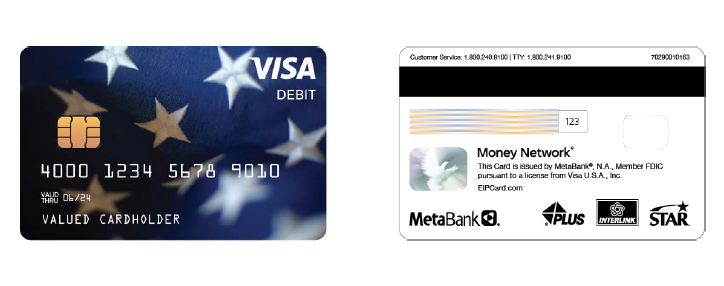
IRS and Treasury urge eligible people who don’t receive a direct deposit to watch their mail carefully during this period. The prepaid debit card, called the Economic Impact Payment card, is sponsored by the Bureau of the Fiscal Service and is issued by Treasury’s financial agent, MetaBank®, N.A. The IRS does not determine who receives a prepaid debit card.
Taxpayers should note that the form of payment for the second mailed EIP may be different than the first mailed EIP. Some people who received a paper check last time might receive a prepaid debit card this time, and some people who received a prepaid debit card last time may receive a paper check.
More information about these cards is available at EIPcard.com.
EIP Cards are safe, convenient and secure. EIP Card recipients can make purchases online or in stores anywhere Visa® Debit Cards are accepted. They can get cash from domestic in-network ATMs, transfer funds to a personal bank account and obtain a replacement EIP Card if needed without incurring any fees. They can also check their card balance online, through a mobile app or by phone without incurring fees. The EIP Card provides consumer protections including certain protections against fraud, loss and other errors.
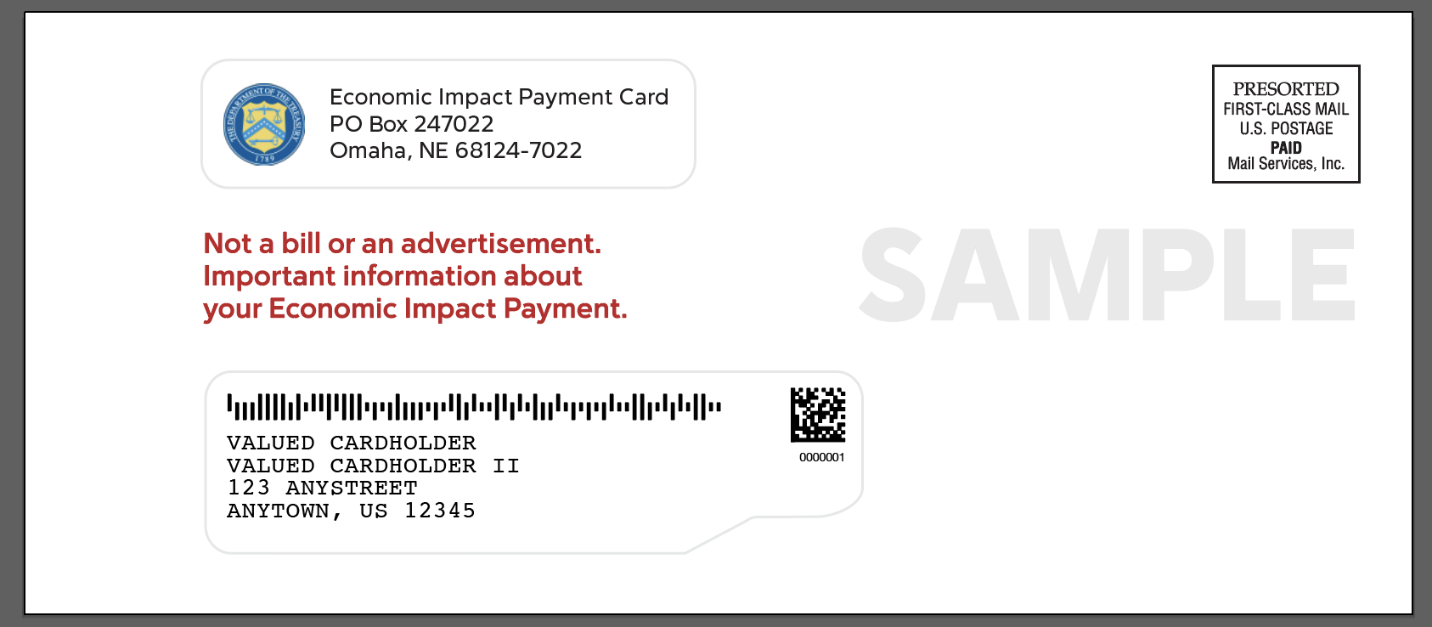
EIP Cards are being sent in a white envelope that prominently displays the U.S. Department of the Treasury seal. The EIP Card has the Visa name on the front of the Card and the issuing bank name, MetaBank®, N.A. on the back of the card. Each mailing will include instructions on how to securely activate and use the EIP Card.
EIP Cards are being issued to eligible recipients across all 50 states and the District of Columbia. Residents of the western part of the United States are generally more likely to receive an EIP Card.
The swift issuance of this second round of payments follows the successful delivery of more than $270 billion in CARES Act Economic Impact Payments earlier this year. To check the status of a payment, visit IRS.gov/GetMyPayment. For more information about Economic Impact Payments visit IRS.gov/EIP.

Changes to Minimum Wage and PFML In Massachusetts
Minimum Wage Increase – The Massachusetts Department of Labor has increased the state minimum wage to $13.50 per hour and the minimum base wage for tipped employees to $5.55 per hour, effective January 1, 2021.
Premium Pay Decrease – The premium pay for working Sunday, Memorial Day, Juneteenth, Independence Day and Labor Day will be reduced to 1.2 times an employee’s regular rate, also effective January 1, 2021. However, the premium pay for working on New Year’s Day, Columbus Day and Veterans Day will remain at 1.5 times an employee’s regular rate.
Paid Family and Medical Leave (PFML) – The PFML notice has also been revised. The updated notice clarifies that for a worker to qualify as a covered individual under PFML, this worker must also be eligible for unemployment in Massachusetts. The updated notice also outlines certain job protections that do not apply to self-employed individuals.
State law requires all employers to post the Massachusetts Wage & Hour Laws poster in the workplace. Here some options for posters outlining changes in Massachusetts minimum wage through January 1, 2023. If needed, please update your workplace posting accordingly.
Voted Best Accountant, Financial Planner & Insurance Agency in Wrentham 2011-2020 & Regional Favorite 2016-2020

Voted 2022 Local Businessperson of the Year in Wrentham by Alignable

Voted 2020-2021 Local Businessperson of the Year in Wrentham by Alignable

Voted Top 31 Insurance Agency in Providence RI Area
